
Conduit bending charts, often in PDF format, are crucial for electricians. They provide precise measurements for accurately bending tubo conduit, ensuring correct offsets and angles for installations.

Understanding Conduit and its Applications
Conduit, encompassing various materials like EMT, IMC, and rigid metal, serves as a protective raceway for electrical wiring. Its primary application lies in safeguarding conductors from physical damage, moisture, and chemical exposure within buildings and industrial settings; Accurate bending, guided by tabla de medidas para doblar tubo conduit pdf resources, is paramount for efficient installation.
Different conduit types necessitate specific bending techniques and radii; Understanding these nuances, alongside utilizing precise measurement charts, ensures code compliance and operational safety. Proper conduit runs minimize voltage drop and facilitate future wiring modifications. The availability of PDF charts streamlines the process, offering readily accessible bending data for electricians on the job site.
The Importance of Accurate Measurements
Precise measurements are non-negotiable in conduit bending, directly impacting the functionality and safety of electrical systems. Utilizing a tabla de medidas para doblar tubo conduit pdf ensures bends align perfectly with project specifications, preventing costly rework and potential hazards. Incorrect angles or offsets can lead to wiring strain, insulation damage, and even short circuits.
Relying on estimations instead of documented data from PDF charts introduces unacceptable risk. Accurate bending minimizes material waste, optimizes installation time, and guarantees compliance with electrical codes. The detailed information within these charts, covering various conduit sizes and bending angles, is essential for professional electricians seeking reliable results.
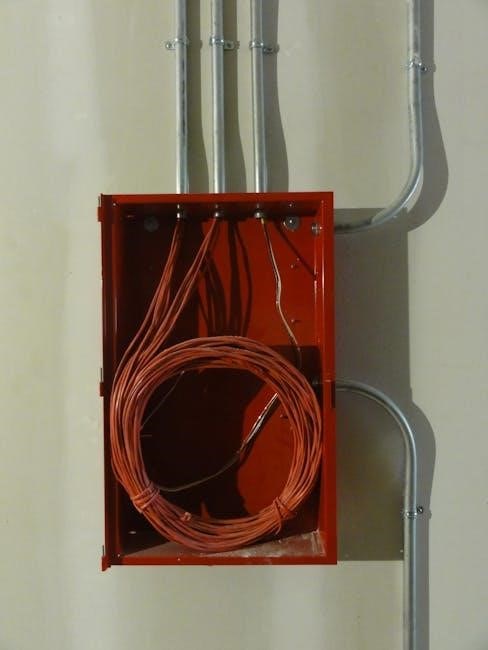
Conduit Bending Tools and Equipment
Essential tools include conduit benders, levels, and measuring tapes, used alongside a tabla de medidas para doblar tubo conduit pdf for precise, code-compliant bends.
Manual Conduit Benders
Manual conduit benders are fundamental tools, relying on leverage and the electrician’s skill. Utilizing a tabla de medidas para doblar tubo conduit pdf is paramount with these tools, as accurate bends depend on correctly interpreting the chart’s data. These benders come in various sizes, corresponding to different conduit diameters.
The bending process involves aligning the conduit with the marked degree on the bender, applying consistent pressure, and referencing the PDF chart for ‘take-up’ – the amount of conduit consumed during the bend. Proper technique, guided by the tabla, minimizes kinks and ensures smooth, accurate 90 and 45-degree bends. Understanding the chart’s gain and shrinkage values is also vital for complex bends and offsets.
Hydraulic Conduit Benders
Hydraulic conduit benders offer significant mechanical advantage, simplifying bends in larger conduit sizes; However, even with hydraulic assistance, referencing a tabla de medidas para doblar tubo conduit pdf remains essential for precision. These benders utilize a hydraulic pump to apply consistent bending force, reducing physical strain on the electrician.
The PDF chart guides the setup, indicating the correct die and follower combinations for the specific conduit size and bend angle. Accurate ‘take-up’ measurements, found on the tabla, are crucial for achieving the desired bend radius. While hydraulics provide power, proper chart interpretation prevents over-bending or creating flattened sections. Consistent pressure and careful monitoring of the bending process, guided by the chart, are key to success.
Using Bending Tables Effectively
Mastering the tabla de medidas para doblar tubo conduit pdf is paramount for accurate electrical work. These tables aren’t simply lookup guides; they represent calculated values based on conduit size, bend angle, and ‘take-up’ – the amount of conduit consumed during the bend. Understanding ‘take-up’ is critical; it dictates how much extra conduit to allow for each bend.
Effectively utilizing the tabla involves identifying the correct conduit size, desired angle (90, 45, etc.), and then locating the corresponding ‘take-up’ measurement. Always double-check your calculations and the chart before bending. Remember, a PDF version allows for easy printing and on-site reference, minimizing errors and ensuring professional results. Precise measurements translate to safer and more reliable installations.

Decoding Conduit Bending Measurement Tables
Conduit bending tables, often found as PDFs, detail crucial data: size, bend angle, and ‘take-up’. Interpreting these values ensures precise tubo conduit bends.
Understanding Table Columns: Size, Bend Angle, and Take-Up
Conduit bending charts, frequently available as PDF documents, are organized into key columns for efficient use. The ‘Size’ column specifies the tubo conduit diameter – 1/2”, 3/4”, or 1”, for example. ‘Bend Angle’ indicates the desired degree of the bend, commonly 90 or 45 degrees.
However, ‘Take-Up’ is arguably the most critical measurement. It represents the amount of straight conduit needed to achieve the specified bend. This value varies based on conduit size and bend angle. Accurate take-up measurements, found within the PDF tabla de medidas, prevent over or under-bending. Understanding these columns is fundamental for precise tubo conduit installation, ensuring correct offsets and avoiding costly errors.
Reading a Typical Conduit Bending Chart (PDF Format)
A standard conduit bending chart, usually a PDF, presents data in a tabular format. Locate the correct conduit size first – 1/2”, 3/4”, or 1”. Then, find the desired bend angle (e.g., 90°, 45°). The intersection of the size and angle reveals crucial measurements.
Pay close attention to ‘Take-Up’, the distance needed for a precise bend. Some charts also include ‘Gain’ and ‘Shrinkage’ values, indicating how much length is added or lost during bends. These PDF tabla de medidas often feature diagrams illustrating bending procedures. Always double-check your calculations and measurements against the chart to ensure accurate tubo conduit installation and avoid rework.
Interpreting Gain and Shrinkage in Bends
Gain and shrinkage are critical factors when interpreting conduit bending charts (PDF format). Gain refers to the increase in length on bends greater than 90 degrees, effectively lengthening the conduit run. Conversely, shrinkage occurs on bends less than 90 degrees, shortening the run.
These values, found within tabla de medidas para doblar tubo conduit, are essential for accurate layout. Ignoring them leads to misaligned components and installation errors. Understanding these adjustments ensures the conduit reaches its intended destination. Accurate accounting for gain and shrinkage, as detailed in the PDF, minimizes waste and rework, contributing to a professional and efficient installation of the tubo conduit.

Specific Conduit Sizes and Their Bending Radii
PDF tabla de medidas detail varying bending radii for different tubo conduit sizes—1/2″, 3/4″, and 1″—dictating bend accuracy and tool selection.
1/2″ Conduit Bending Measurements
1/2″ conduit bending relies heavily on precise tabla de medidas, frequently found in PDF guides. These charts outline the ‘take-up’ – the length of conduit consumed during a bend – for various angles. For a 90-degree bend, the take-up is approximately 6 inches.
Understanding these measurements is vital for accurate offsets and avoiding wasted material. A 45-degree bend requires roughly 3 inches of take-up. The charts also specify bend radii, crucial for preventing kinking.
When using a PDF chart, always verify the conduit type (EMT, rigid, etc.) as measurements differ. Accurate marking based on these medidas ensures professional results, minimizing adjustments and ensuring code compliance. Proper technique, combined with the chart, delivers clean, precise bends.
3/4″ Conduit Bending Measurements
3/4″ conduit bending demands careful attention to tabla de medidas, often accessed as a PDF document. Compared to 1/2″, the take-up increases; a 90-degree bend typically requires around 8 inches. These charts detail precise dimensions for various bend angles, ensuring accurate installations.
For a 45-degree bend, expect a take-up of approximately 4 inches. Understanding the relationship between bend angle and take-up minimizes errors and material waste. Always confirm the conduit schedule (40 or 80) as this impacts the bending radius.
Referencing a PDF chart and accurate marking are essential. Proper bending technique, guided by these medidas, guarantees professional results and adherence to electrical codes.
1″ Conduit Bending Measurements
Working with 1″ conduit necessitates precise medidas, readily available in PDF bending charts. Due to its larger diameter, the take-up is significantly greater than smaller sizes. A standard 90-degree bend typically requires around 12 inches of take-up, demanding more space for maneuvering.
For 45-degree bends, anticipate a take-up of approximately 6 inches. Accurate marking, based on the tabla, is crucial to avoid over or under-bending. Conduit schedule (40 or 80) influences the bending radius, so verify this detail.
Consulting a PDF chart ensures compliance with electrical codes and professional results. Careful application of bending techniques, guided by these medidas, is paramount.

Calculating Bends Without a Table
Bends can be calculated using trigonometry when a tabla isn’t available. Understanding offset and multi-bend formulas allows for precise conduit routing and installation.
Using Trigonometry for Accurate Bends
When a tabla de medidas para doblar tubo conduit pdf isn’t accessible, trigonometric functions become essential for precise conduit bending. Calculating angles and distances relies on sine, cosine, and tangent. Determining the necessary bend angle involves understanding the relationship between rise, run, and hypotenuse.
For instance, to find the angle for an offset, you can use the arctangent function (tan-1). The formula is angle = tan-1(rise/run). Accurate measurements of rise and run are critical for correct calculations. Furthermore, understanding the Pythagorean theorem (a2 + b2 = c2) helps determine conduit length. These calculations ensure bends are accurate, minimizing waste and ensuring a professional installation, even without a pre-defined chart.
The Role of Offset and Multi-Bend Calculations
Even with a tabla de medidas para doblar tubo conduit pdf, complex installations often demand offset and multi-bend calculations. Offsets navigate obstructions, requiring precise determination of gain and shrinkage per bend. Multi-bend calculations are crucial when navigating multiple obstacles or achieving specific conduit runs.
These calculations involve summing individual bend angles and accounting for cumulative gain or shrinkage. Understanding how bends interact is vital; a series of smaller bends can achieve the same result as one large bend, but with different overall length. Accurate calculations minimize material waste and ensure a clean, professional finish. Utilizing trigonometric principles alongside chart data enhances precision and adaptability in challenging conduit layouts.
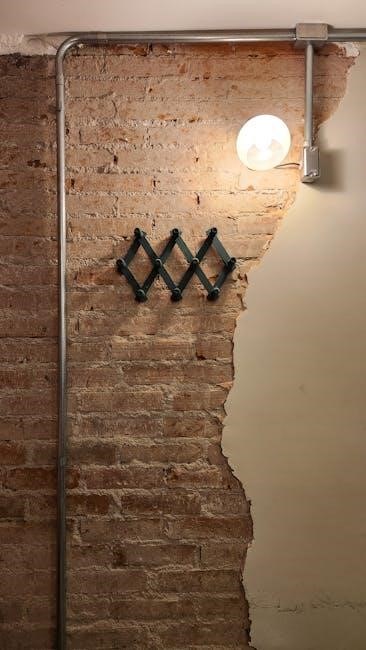
Common Bending Techniques
Bending techniques, guided by a tabla de medidas para doblar tubo conduit pdf, include 90 and 45-degree bends, plus offsets and saddle bends for complex routing.
90-Degree Bends
Achieving precise 90-degree bends in tubo conduit relies heavily on accurate measurements derived from a tabla de medidas para doblar tubo conduit pdf. These charts detail the necessary “take-up” – the amount of conduit consumed during the bend – to ensure the final bend aligns correctly with project specifications.
Electricians consult these charts to determine the correct bending radius based on the conduit size. Proper technique involves carefully aligning the conduit within the bender, applying consistent pressure, and verifying the bend angle. Incorrect measurements or bending can lead to kinks, collapses, or angles deviating from the required 90 degrees, necessitating rework and potentially compromising the installation’s integrity. Utilizing the PDF chart minimizes errors.
45-Degree Bends
Creating accurate 45-degree bends in tubo conduit demands precise adherence to the measurements found within a tabla de medidas para doblar tubo conduit pdf. Unlike 90-degree bends, 45-degree bends require a different “take-up” value, reflecting the reduced angle and altered conduit consumption during the bending process.
The PDF chart specifies the exact distance to mark on the conduit for a successful 45-degree bend, considering the conduit’s diameter. Electricians must carefully align the conduit within the bender, applying even pressure to achieve a smooth, consistent bend. Errors in measurement or technique can result in bends that are either too shallow or too steep, impacting the overall layout and functionality of the electrical system. Charts are essential for precision.
Offsets and Saddle Bends
Offsets and saddle bends represent more complex conduit manipulations, heavily reliant on detailed tabla de medidas para doblar tubo conduit pdf data. These bends navigate around obstructions without altering the conduit’s primary run direction. The PDF charts provide crucial “travel” measurements – the distance between bends – and precise angles for both the initial and secondary bends.
Saddle bends, used to pass conduit over obstacles, require careful calculation of height and width, all dictated by the chart’s specifications. Offsets, used to shift the conduit’s position laterally, demand accurate “gain” and “shrinkage” values. Correct execution ensures a smooth, code-compliant pathway, avoiding stress on the conduit and maintaining proper support.

Troubleshooting Common Bending Problems
Bending issues often stem from incorrect tabla de medidas para doblar tubo conduit pdf application. Kinks, collapses, or inaccurate angles require re-bending or careful measurement review.
Kinks and Collapses in Conduit
Kinks and collapses frequently occur during conduit bending, often due to exceeding the conduit’s allowable bending radius as detailed in tabla de medidas para doblar tubo conduit pdf guides. Insufficient support during the bending process, or applying excessive force, can also contribute to these issues; Using the correct bending tools and adhering strictly to the recommended bending radii specified within the charts is paramount.
Furthermore, improper lubrication of the conduit before bending can increase friction, leading to deformation. Always inspect the conduit for pre-existing damage before attempting a bend. If a kink or collapse occurs, attempting to straighten it is generally not recommended, as it weakens the conduit’s structural integrity; it’s best to discard the damaged section and start anew, referencing the tabla for accurate measurements.
Inaccurate Bend Angles
Inaccurate bend angles are a common problem when bending conduit, often stemming from misinterpreting the tabla de medidas para doblar tubo conduit pdf charts or imprecise use of bending tools. Failing to account for “springback”—the tendency of conduit to return slightly towards its original shape after bending—is a frequent cause. Consistent application of the correct bending technique, as illustrated in the charts, is vital.
Calibration of bending equipment is also crucial; a poorly calibrated bender will consistently produce inaccurate angles. Double-checking measurements against the tabla throughout the bending process, and making small adjustments as needed, can minimize errors. Remember that even slight angular deviations can accumulate in complex bends, leading to significant alignment issues.
Dealing with Obstructions During Bending
Encountering obstructions while bending tubo conduit is inevitable. Utilizing a tabla de medidas para doblar tubo conduit pdf to pre-calculate offsets and bends helps anticipate potential conflicts. If an obstruction is unavoidable, avoid forcing the bend, as this can cause kinking or collapse. Instead, consider a multi-bend solution, employing smaller, incremental bends to navigate around the obstacle.
Carefully assess the obstruction’s location and size. Sometimes, a slight adjustment to the overall conduit run is the simplest solution. When working near existing structures, protect surfaces to prevent damage during bending. Always prioritize safety and avoid bending conduit beyond its capacity to circumvent obstructions; consult the tabla for maximum bend radii.
Resources for Conduit Bending Charts (PDF)
Numerous online sources offer downloadable tabla de medidas para doblar tubo conduit pdf charts. Manufacturer websites also provide specific bending guides for their products.
Online Sources for Downloadable Charts
Finding reliable tabla de medidas para doblar tubo conduit pdf charts online is straightforward. Several websites specialize in electrical resources, offering free downloads of various bending tables. These charts often cover different conduit sizes – 1/2″, 3/4″, and 1″ – and include essential data for 90-degree and 45-degree bends.
Electrical forums and communities frequently share useful PDF documents, including bending charts created by experienced electricians. Always verify the source and ensure the chart aligns with the specific conduit type you’re using (EMT, rigid, etc.). Some manufacturers also host downloadable charts directly on their websites, providing accurate data for their products. Remember to bookmark these resources for quick access during installations, ensuring precise and code-compliant conduit runs.
Manufacturer-Specific Bending Guides

Many conduit manufacturers provide detailed bending guides, often available as PDF downloads, tailored to their specific products. These guides are invaluable as they account for subtle variations in conduit material and dimensions, ensuring the highest accuracy when using a tabla de medidas.
These resources frequently include detailed instructions, diagrams, and comprehensive bending charts for various conduit sizes and bending angles. Utilizing manufacturer-specific guides minimizes errors and guarantees compatibility with their systems. Look for these guides on the manufacturer’s official website, often within the product documentation or technical support sections. Prioritizing these guides over generic charts leads to professional, reliable, and code-compliant electrical installations.